
Uncategorized
What the Specs on a Grambling Tigers Jersey Page Actually Mean
Oct
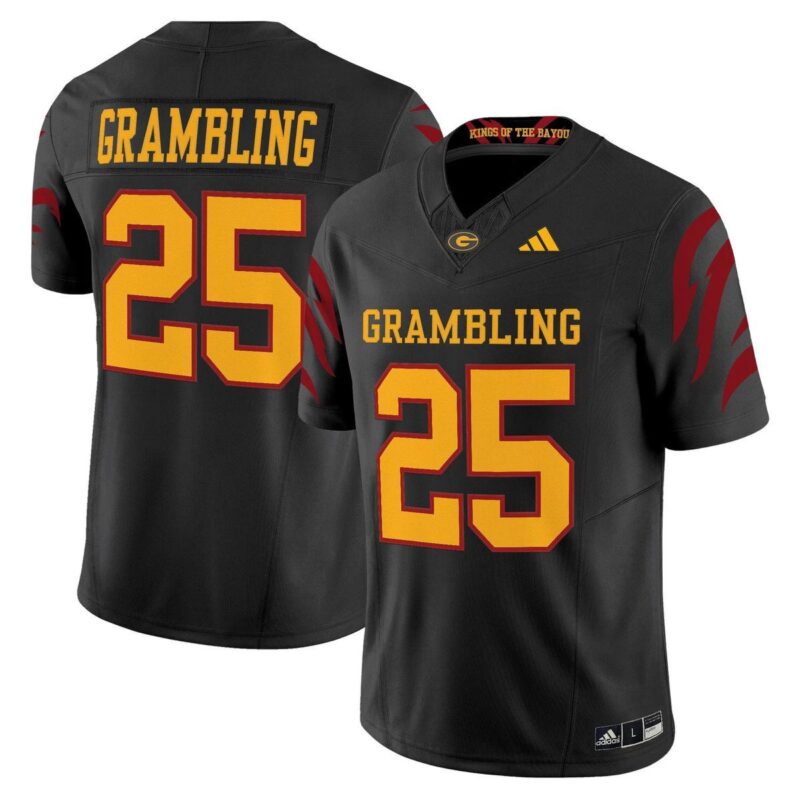
The specs on a Grambling Tigers jersey page tell you four things: what the shirt is made of (a 100% recycled polyester body), how the name and number are attached (stitched tackle twill), how the panels are joined (flatlock stitching) and how it is finished (embroidered applique and graphics, a satin twill jock tag, a V-neck, short sleeves and a reinforced tagless collar). Rather than a dictionary list, this post takes a slow walk around the jersey, starting at the collar and ending at the hem, so each spec makes sense in the place where you would actually see it.
Start at the collar
Pick up any listing in the Grambling Tigers jersey collection and the first thing your hand reaches is the neckline. The page calls it a V-neck with a reinforced tagless collar. Two ideas are packed into that phrase. “Reinforced” means the collar has extra structure so it holds its shape around the neck. “Tagless” means the size and care information is not on a separate label sewn at the back of the neck, so there is nothing flapping or scratching there.
Move to the shoulders and sleeves
Run your eyes from the collar out to the sleeve. The page lists short sleeves, which is the standard football jersey cut. Where the sleeve meets the body, and down each side, is where you will find the seams.
The seams: flatlock stitching
Flatlock is a way of sewing two pieces of fabric edge to edge so the join lies flat rather than folding over into a thick ridge. On the outside, a flatlock seam often looks like a narrow band of crisscrossed thread. On the inside, it sits close to the fabric. On a sports shirt, that matters because the side seams sit against your body all day.
The fabric between the seams
The panels themselves are a 100% recycled polyester body. Polyester is a synthetic fiber; “recycled” tells you the fiber came from reclaimed material. It also explains the care line on the page, machine wash and tumble dry low, which is typical guidance for a synthetic athletic shirt with sewn-on details.
Turn to the back: the name and number
This is where most people look first. The page says the letters and numbers are stitched tackle twill. Tackle twill is a firm woven fabric cut into the shapes of characters. Those shapes are laid on the jersey and sewn down around their outline. In photos, look for:
- A visible line of stitching tracing the edge of each letter and digit
- A slight raised profile compared with the shirt fabric
- Clean corners on numbers with sharp angles
On a word-and-number listing like the Grambling #25 Grambling Tigers 2025 Vapor Limited jersey, both the word across the shoulders and the digits below are made this way. The same goes for player listings such as a Deljay Bailey #5 listing or a Doug Williams #12 listing.
Check the smaller graphics
The page also mentions embroidered applique and graphics. Applique is a fabric piece sewn onto the jersey to form a shape; embroidery is a design made entirely of thread. These cover the smaller marks beyond the main name and number. Photos of the specific listing you choose will show where they sit.
Finish at the hem: the jock tag
Low on the front, near the bottom edge, you will find the satin twill jock tag. Satin twill is a smooth fabric with a slight sheen, and the jock tag is the small rectangular label that many football jerseys carry in that spot. It is a finishing touch that completes the jersey’s look.
Putting the tour together
- Collar: V-neck, reinforced, tagless.
- Sleeves: short.
- Seams: flatlock, lying flat against the body.
- Fabric: 100% recycled polyester.
- Back: stitched tackle twill name and number.
- Details: embroidered applique and graphics.
- Hem: satin twill jock tag.
Using the specs to choose
Because the spec list is shared across the category, the real choices come down to color and what goes on the back. Colors listed are Black, Black Alter and Gold. Back options range from word-and-number listings like the Bayou #318 listing, to player listings like a Willie Brown #24 listing, to the custom name-and-number listing where you supply your own text. No special lettering instructions were captured, so if you go custom, follow the instructions on the product page.
Next time you open a Grambling jersey page, read the specs in this order, collar to hem, and you will know exactly what each line describes.
